
Table of Contents
In the expansive realm of nonfiction literature, the question often arises: How do you discern the nonfiction genre that complements your book idea most effectively? And, does the genre truly hold significance?
Why should you care?
In today’s literary landscape, selecting the right nonfiction genre is not merely a choice; it is the essential key to positioning your book in front of the ideal audience. Readers have preferred genres that resonate with their interests. It might go unnoticed if your book is misplaced within this intricate mosaic. This could significantly impede your message and book sales in a world inundated with information.
Combining your passion for a subject with the appropriate genre and topic can yield an influential, meaningful book. Whether you are a scientist, historian, self-help advocate, or travel enthusiast, there exists a nonfiction genre that can amplify your voice and convey your message.
In this article, I’ll guide you through various nonfiction genres, providing insights into what makes each unique. We will explore how to match your field of expertise with the perfect genre and uncover book topics that are not just compelling but also in demand. It’s not just a list of nonfiction genres but insight into why some genres could suit you better.
By the end of this blog post, you will clearly understand the diverse nonfiction genres and gained invaluable insights into selecting the perfect genre for your expertise and book idea.
How to Choose the Perfect Nonfiction Genre?
Choosing the right genre for your nonfiction book involves considering your expertise, passion, and target audience. Ask yourself these pivotal questions:
- What is the core message or story I want to convey?
- Who is my intended audience, and what are their needs and interests?
- What genre aligns best with my expertise and writing style?
- How can I use this genre to convey my unique perspective or insights?
Answering these questions will enable you to align your book concept with the most fitting nonfiction genre, ensuring it finds its rightful place in the literary world.
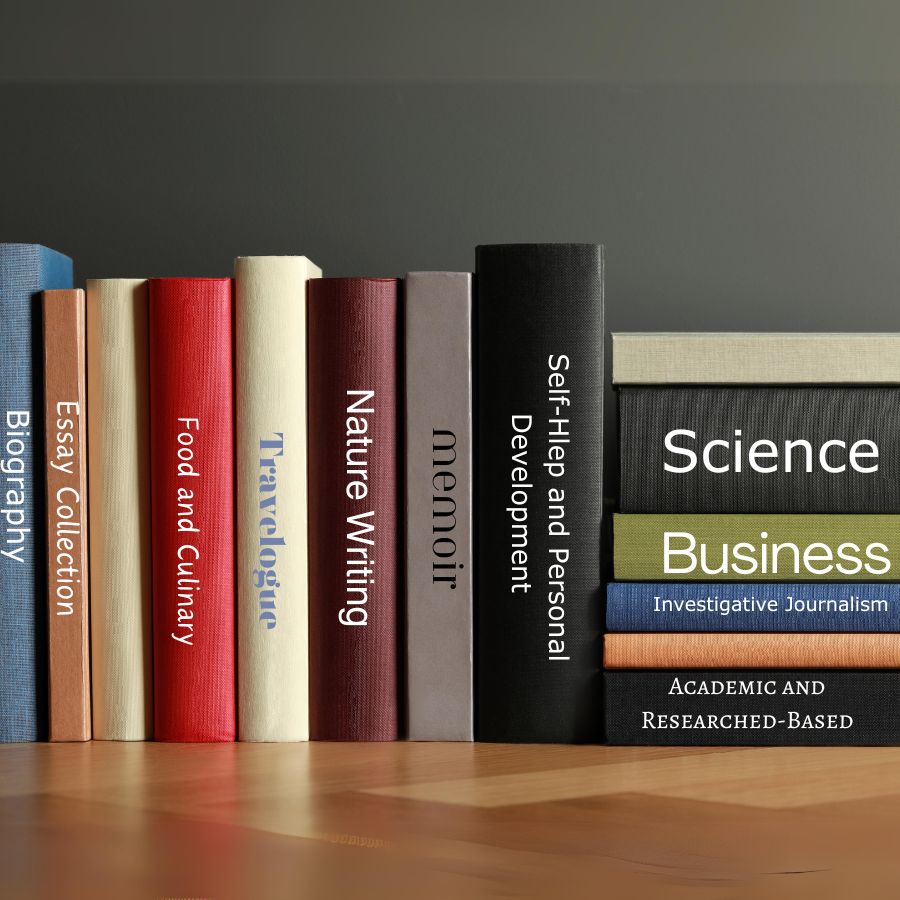
6 Common Nonfiction Genres and Their Nuances
1. Memoir
Memoirs are autobiographical accounts that focus on a specific period, theme, or aspect of the author’s life. They often offer personal insights, emotions, and reflections, forging an intimate connection with the reader. Memoirs are ideal for authors sharing personal stories or significant life experiences. This genre requires honest self-reflection and establishing deep emotional bonds with readers.
2. Biography
Biographies are written accounts of someone else’s life, usually a prominent historical figure, a celebrity, or a notable individual. They present an objective and comprehensive view of the subject’s life and achievements. Biographies are apt for authors intrigued by historical figures, influencers, or remarkable personalities. This genre necessitates thorough research and an unwavering commitment to objectivity. Writing a biography offers the opportunity to contribute to a deeper understanding of the subject’s life and impact.
3. Self-Help and Personal Development
Self-help and personal development books aim to guide readers in enhancing their lives or attaining specific goals. They furnish practical advice, strategies, and exercises to facilitate personal growth. This genre is tailor-made for authors with expertise in a particular self-improvement area, whether mental health, fitness, or personal finance. The writer’s focus centers on delivering actionable steps and solutions to readers. Crafting a self-help or personal development book requires a profound understanding of the challenges and aspirations of the target audience.
4. Travelogue
Travelogues recount the author’s adventures while traveling to specific destinations. They seamlessly blend personal anecdotes, cultural insights, and travel tips, offering readers a vicarious travel experience. Writing travel books suits authors with a passion for exploration and a knack for storytelling. The emphasis is on vivid descriptions, cultural understanding, and engaging narratives. The author possesses the ability to transport readers to distant places through words.
5. Investigative Journalism
Investigative journalism involves in-depth research, interviews, and analysis to uncover hidden truths or expose important issues. It often requires thorough fact-checking and the presentation of compelling evidence. This genre is Ideal for authors intrigued by social justice, political matters, or uncovering scandals. Investigative journalism prioritizes accuracy, objectivity, and ethical reporting. Authors in this genre are dedicated to the pursuit of truth and presenting complex information engagingly.
6. Academic And Research-Based
Academic or research-based books are grounded in rigorous research, analysis, and scholarly discussions. They are frequently composed for an academic or specialized audience and contribute to existing knowledge within a specific field. This genre aligns with authors possessing expertise in a particular academic or research domain. The emphasis is on thorough research, citations, and intellectual rigor. Writing academic and research-based books necessitates a firm grasp of academic conventions and a discernible contribution to the field.
Exploring 5 More Nonfiction Genres with Unique Opportunities
1. Nature Writing
Nature writing is a genre that delves into the natural world, often intertwining personal experiences, observations, and scientific insights. It encompasses various topics, from outdoor adventures to ecological studies. This genre beckons authors who love nature and aspire to share their passion for the environment. Nature writing mandates a keen sense of observation, a talent for poetic prose, and an appreciation for the beauty and intricacies of the natural world. It offers a platform for raising awareness about environmental concerns and advocating for conservation.
2. Food and Culinary Writing
Food and culinary writing explore food, cooking, and culinary culture. It can include recipe books, food memoirs, and in-depth studies of cuisines. This book genre is best suited for authors who are food enthusiasts, chefs, or those with a culinary background. It demands a profound love for food and the ability to describe flavors, textures, and the cultural significance of dishes. The food and culinary genre provides a unique opportunity to share family recipes, cultural traditions, and culinary adventures.
3. Science Communication
Science communication endeavors to make complex scientific concepts accessible to the general public. It includes popular science books, articles, and blogs that bridge the gap between scientific research and the layperson. This nonfiction genre is perfect for authors with a background in science who are passionate about sharing scientific discoveries with the public. It requires the ability to explain complex ideas in a clear, engaging, and relatable manner. Science communication books offer a chance to promote science literacy and inspire interest in scientific topics.
4. Essay Collections
Essay collections are compilations of standalone essays on a variety of topics. These essays can be personal reflections, observations, or explorations of broader themes. This nonfiction gene is ideal for authors who relish crafting concise, thought-provoking pieces on various subjects. It enables creative exploration of diverse ideas and experiences. Essay collections require connecting seemingly unrelated topics into a cohesive collection.
5. Literary Criticism and Analysis
Literary criticism involves in-depth analysis and interpretation of literary works, often focusing on specific themes, genres, or authors. It’s ideal for those who have a deep appreciation for literature. This genre suits authors with a robust background in literature and an eagerness to explore the subtleties of literary works. It requires a critical and analytical approach to literature and the capacity to provide fresh insights and interpretations. Literary criticism and analysis offer a chance to contribute to the understanding and appreciation literary art.
Choosing the Right Genre for Your Profession
Selecting the right genre for your profession depends on your goals, expertise, and the message you want to convey. I hope these genre suggestions for certain occupations will help you find the right nonfiction genre for your book.
These recommendations aren’t cast in stone; they are mere suggestions to give you an idea. Neither are you limited to one genre; sometimes, they overlap. The choice ultimately depends on your expertise, message, and the readers you aim to reach. Many successful authors have chosen to write across multiple genres to convey their ideas effectively and engage with diverse readers.
1. Life Coaches
Genre Recommendation: Self-Help and Personal Development
Life coaches often aim to guide individuals toward personal growth, better mental health, and overall well-being. The self-help and personal development genre is well-suited for sharing practical advice, strategies, and exercises to facilitate personal transformation.
2. Business Coaches
Genre Recommendation: Business and Leadership
Business coaches typically focus on improving the performance and strategies of business professionals. The business and leadership genre allows them to delve into leadership principles, organizational development, and effective business practices.
3. Executives
Genre Recommendation: Memoir or Leadership
With their wealth of experiences, executives can benefit from writing memoirs to share their personal journeys and leadership lessons. Alternatively, they can contribute to the leadership genre, offering insights into corporate leadership and decision-making.
4. Business Owners
Genre Recommendation: Memoir, Self-Help and Personal Development, or Entrepreneurship
Business owners can share their entrepreneurial journeys in memoirs, offer advice and guidance in the self-help and personal development genre, or delve into entrepreneurship topics such as startups, small business strategies, and growth.
5. Pastors
Genre Recommendation: Religious or Inspirational
Pastors inspire and provide spiritual guidance. The religious and inspirational genre allows them to explore theological topics, share inspirational stories, and teach believers.
6. CEOs
Genre Recommendation: Leadership, Business, or Memoir
CEOs can contribute to leadership and business genres by sharing insights into corporate leadership and management strategies. Alternatively, writing a memoir can allow them to share their personal and professional experiences, lessons learned, and vision for the future.
7. Health and Wellness Experts
Genre Recommendation: Health and Wellness, Self-Help and Personal Development
Health and wellness experts can share their knowledge about physical and mental health, offer practical advice for improving well-being, and guide readers on their journey to a healthier lifestyle.
8. Educators and Teachers
Genre Recommendation: Education, Pedagogy, Parenting
Educators and teachers can share their expertise in the educational field by writing books on effective teaching methods, classroom management, or parenting guides to support children’s learning.
9. Legal Professionals
Genre Recommendation: Law, Legal Thriller, True Crime
Legal professionals can write about legal principles and case studies, or even venture into the realm of legal thrillers and true crime stories based on their experiences.
10. Scientists and Researchers
Genre Recommendation: Popular Science, Science Communication, Nature Writing
Scientists and researchers can share their findings with a broader audience through popular science writing, science communication, or nature writing if their research relates to the natural world.
11. Historians and Archaeologists
Genre Recommendation: History, Archaeology, Biography
Historians and archaeologists can write about historical events, artifacts, or biographies of significant historical figures.
These are just a few examples; the possibilities of nonfiction writing are virtually limitless. As you embark on your nonfiction writing journey, remember that choosing a genre is crucial. Your expertise, passion, and message will guide you toward the genre that aligns best with your goals. Whether you’re a life coach, a scientist, or an environmentalist, there’s a nonfiction genre waiting to amplify your voice and impact. Choose wisely, and let your words inspire, inform, and engage your readers.